

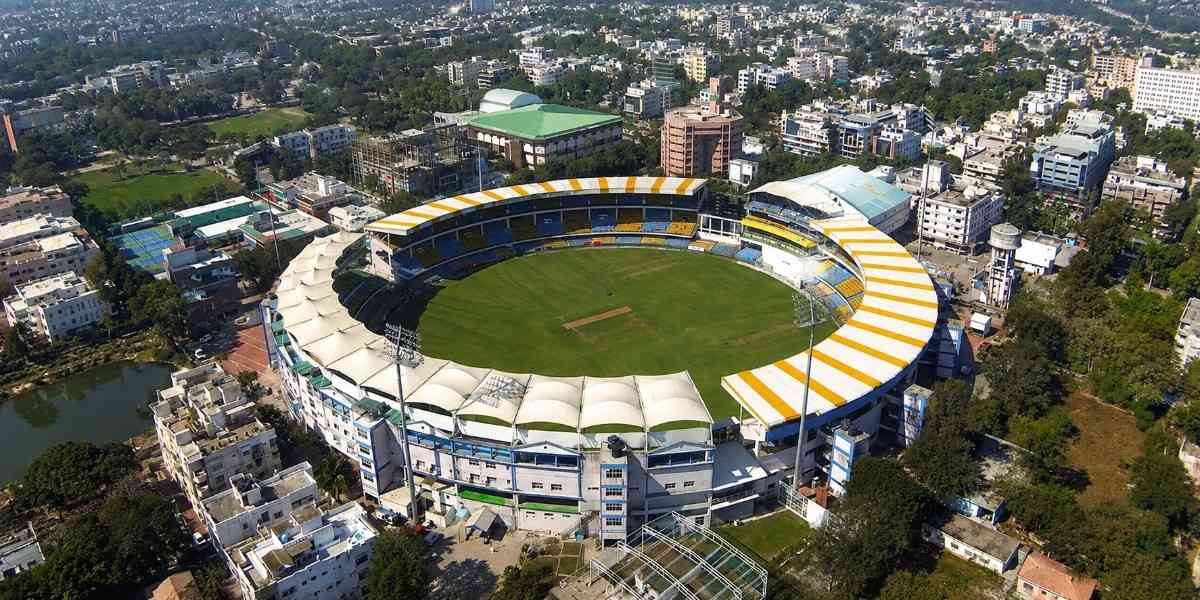
There’s a special vibe to a Wankhede Stadium match that stays with fans much after the last ball is played. Spectators are up close, the decibel count rises in no time, and there’s enough in the pitch for batters and bowlers to never switch off. It has witnessed some steep chases, dramatic collapses, tearful goodbyes and big totals. But to talk about Wankhede Stadium Mumbai, the story needs to start with cricket, not just statistics.
Wankhede Stadium at a Glance
| Detail | Information |
| Stadium name | Wankhede Stadium |
| City | Mumbai, Maharashtra |
| Area | Churchgate, South Mumbai |
| Opened | 1974 |
| Seating capacity | Around 33,100 |
| Local cricket body | Mumbai Cricket Association |
| Bowling ends | Garware Pavilion End and Tata End |
| Floodlights | Available for day-night cricket |
| Home cricket use | Mumbai domestic cricket and IPL fixtures |
The Mumbai Setting Behind the Ground
Wankhede Stadium location gives the ground a strong identity. It stands in Churchgate, close to Marine Drive and Mumbai’s old cricket belt. The area is busy, historic, and closely linked with the city’s sporting culture.
For fans, the location has benefits in a few obvious ways:
- Access by local train means the ground is accessible for large crowds.
- The cricket culture of South Mumbai ensures a lively matchday atmosphere for the venue.
The ground feels woven into Mumbai’s daily rhythm. Office crowds, students, club cricketers, tourists, and long-time cricket followers often pass through the same area on matchdays.
How Wankhede Stadium Became a Cricket Landmark
Wankhede opened in 1974 and became a major venue because Mumbai needed a modern cricket ground under its local cricket setup. The city already had a rich cricket base, but this stadium gave Mumbai a sharper international stage.
Its rise can be understood through four phases:
- The 1970s provided Mumbai with a new international ground.
- The following decades saw major Test and one-day games.
- Floodlit cricket enabled night games.
- The 2011 World Cup final provided the ground with lasting emotional value.
The stadium has changed with time, but it has not lost its old-city cricket feel. This balance gives Wankhede a rare place among Indian cricket grounds.
Wankhede Stadium Capacity and Ground Layout
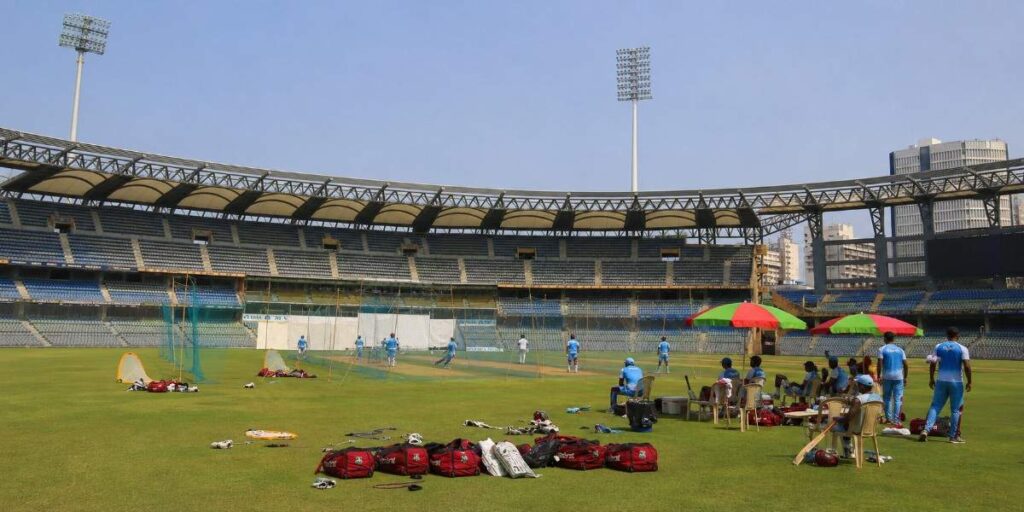
Wankhede Stadium capacity is around 33,100. Some cricket references round the number to 33,000, but the practical reading remains simple. It is a compact international venue with a little over thirty-three thousand seats.
The seating bowl keeps the crowd close to the field. This makes the sound travel fast and gives the ground an intense feel during close matches.
Key layout details include:
- Garware Pavilion End and Tata End are the two bowling ends.
- Several stands are named after noted Mumbai and Indian cricket figures.
- The design gives many spectators a clear view of the square.
- The smaller seating size adds to the pressure feel during tight finishes.
The ground can feel full before a match reaches its final overs. This is why pressure situations at Wankhede often look louder on screen than they do at many larger venues.
Wankhede Stadium Pitch Report
The Wankhede Stadium pitch report is important before every major match because the surface can change the way teams plan. The pitch has red-soil behavior, good bounce, and strong value for shots once batters settle.
Early overs can help fast bowlers. The new ball may move in the air or off the surface, especially when there is evening moisture or a breeze from the sea. Batters who play away from the body can get into trouble during this phase.
After the early movement, batting often becomes easier. The ball comes nicely onto the bat, and square boundaries can bring quick runs. This is why limited-overs matches at this venue can move fast after the powerplay.
For easy match reading, remember these points:
- Fast bowlers can be dangerous with the new ball.
- Batters enjoy bounce once they adjust to pace.
- Dew can make night chases easier.
- Spinners need accuracy rather than slow air alone.
- Poor death bowling can disappear quickly here.
In Test cricket, the surface can behave in layers. Seamers may enjoy carry early, batters can control the middle period, and spinners may gain value later. A team needs discipline across sessions because the pitch rarely forgives careless cricket for long.
Wankhede Stadium Records That Fans Search Most
Wankhede Stadium records show why the venue is discussed before and after major games. The ground has produced both heavy totals and sudden batting failures. This contrast makes it useful for cricket analysis.
| Format | Record Type | Detail |
| Test | Highest team total | India scored 631 against England |
| Test | Lowest team total | New Zealand were bowled out for 62 against India |
| ODI | Highest team total | South Africa scored 438/4 against India |
| ODI | Lowest team total | Sri Lanka were bowled out for 55 against India |
| T20I | Highest team total | West Indies scored 254/6 against Zimbabwe |
| T20I | Highest chase | England reached 230/8 against South Africa |
These numbers explain the ground better than a single label can. Wankhede can reward aggressive batting, but it can also punish weak technique and poor shot selection. The same surface that allows a huge total can create a collapse when early wickets fall.
Wankhede Stadium in IPL Cricket
The Wankhede Stadium IPL records section draws interest because this venue has hosted many dramatic league games. The ground suits the IPL format because matches can change quickly. A strong powerplay, a sharp spell, or a late hitting burst can swing the result.
IPL games at Wankhede often have a few clear patterns:
- Chasing sides can remain hopeful deep into the innings.
- Power hitters get value when the ball is hard.
- Death bowlers need exact yorkers and slower balls.
- Fielding errors become costly because boundaries come fast.
- Captains study dew closely before making toss decisions.
The venue has a strong home-ground feel for Mumbai’s IPL side. The crowd, city setting, and batting-friendly phases make the ground a natural fit for high-pressure league cricket.
Famous Matches and Memories at Wankhede
The 2011 Cricket World Cup final remains the ground’s most powerful memory. India defeated Sri Lanka in Mumbai and lifted the trophy at home. The winning moment still belongs to Indian cricket’s emotional archive.
Sachin Tendulkar’s final international match gave Wankhede another unforgettable chapter. His farewell speech turned the stadium into a shared memory for fans who had followed him from the start of his career.
The ground has witnessed rare feats as well. Ravi Shastri hit six sixes in an over in domestic cricket at this venue. Ajaz Patel later took all ten wickets in a Test innings here, joining a very small group in cricket history.
These moments give Wankhede depth. It is remembered for many different kinds of cricket emotion.
Matchday Tips for Fans Visiting Wankhede
Fans attending a match at Wankhede should plan before leaving home. The area becomes crowded, and entry checks can take time during big fixtures.
A simple plan can make the visit smoother:
- Use Churchgate or Marine Lines if train travel is convenient.
- Reach early to avoid long entry queues.
- Check the gate number before arriving near the stadium.
- Carry only permitted items inside the venue.
- Keep tickets and identity proof ready during security checks.
- Follow event instructions because rules may change by match.
Tickets, entry gates, and permitted items depend on the match organizer and event category. Fans should check the match advisory before travel.
In Summary
Wankhede Stadium remains special because it brings together Mumbai’s cricket history, a lively pitch, tight crowd energy, and unforgettable match moments. It has enough tradition for Test cricket and enough speed for IPL nights. From the World Cup final to famous individual feats, this ground has earned its place in Indian cricket with substance, memory, and drama.
FAQs
Why is it called Wankhede Stadium?
Wankhede Stadium is named after Sheshrao Krishnarao Wankhede, a cricket administrator and former cricket board president. He played an important role in Mumbai getting its own major cricket venue during the 1970s.
Does Wankhede Stadium have a cricket museum?
Wankhede has the MCA Sharad Pawar Cricket Museum inside the stadium premises. The museum presents Mumbai cricket’s legacy, leading players, major achievements, and the association’s role in Indian and world cricket.
Which was the first ODI played at Wankhede Stadium?
The first ODI at Wankhede Stadium was India versus Sri Lanka on January 17, 1987. This came after the venue had already hosted Test cricket for over a decade.
Is parking available near Wankhede Stadium on matchdays?
Parking near Wankhede Stadium is a headache on big matchdays. Roads around Churchgate fill up quickly, and police may block stretches near the gates. Most fans are safer taking the train and walking from Churchgate.
Are bags allowed inside Wankhede Stadium during matches?
Do not carry a backpack to Wankhede Stadium unless the match advisory clearly allows it. Security checks are strict at the gates. A phone, wallet, ticket, ID, and small essentials are the safer choice.